
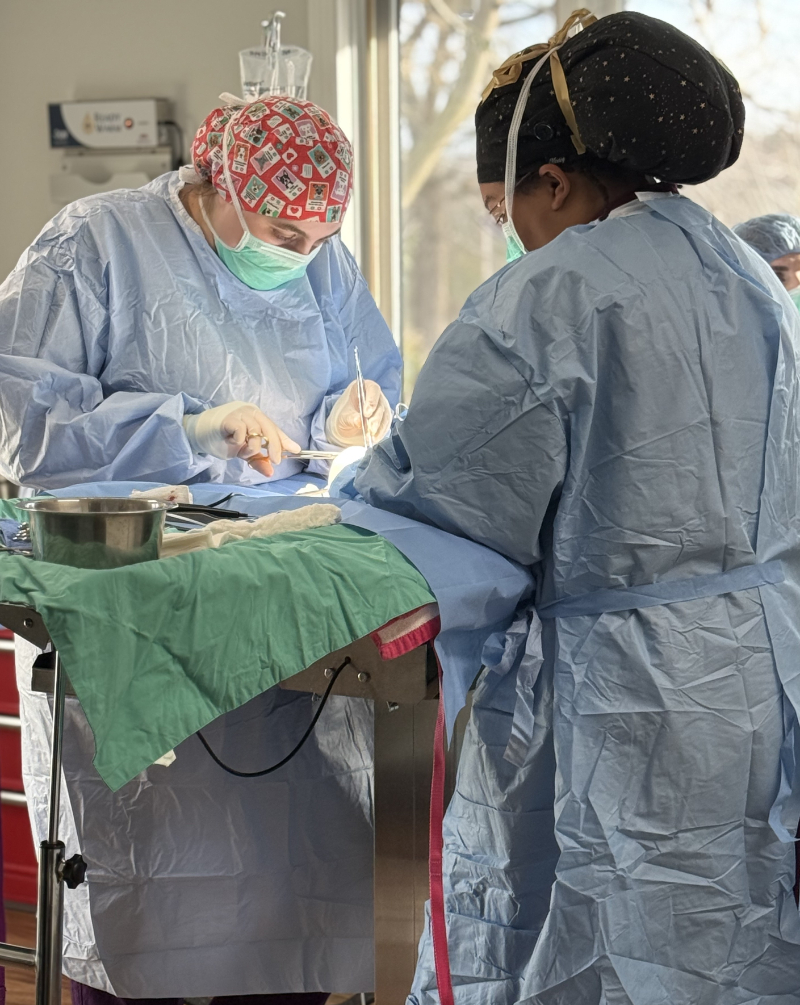
Emergency & Soft Tissue Surgery for Pets in Traverse City, MI
When your pet needs surgery, whether it is a planned procedure or an unexpected emergency, the skilled surgical team at Omnivet is ready. We combine careful surgical technique with advanced anesthetic monitoring to make every procedure as safe as possible for your pet and as stress-free as possible for you.
Surgical Procedures We Perform
Our veterinarians perform a wide range of routine and complex surgeries, including:
- Spays and neuters
- Mass and tumor removals
- Amputations
- Foreign body removal through enterotomy or gastrotomy
- Intestinal resection and anastomosis
- Abdominal exploratory surgery with biopsies
- Wound repair for serious wounds and injuries
- Cesarean sections for difficult labor
- Surgical relief of some urinary obstructions
For dogs with torn cruciate ligaments, our dedicated TPLO surgery program offers same-week consultations and continuous care with one surgeon.
Foreign Body and Ingestion Emergencies
Dogs and cats often swallow things they shouldn’t, including socks, toys, bones, corn cobs, string, and hair ties. These objects can block the stomach or intestines and cause serious internal damage. Signs include repeated vomiting, loss of appetite, abdominal pain, and lethargy. After diagnosis with X-rays, some objects can be retrieved with minimally invasive endoscopy, while others require surgery. If your pet may have eaten something toxic, visit our toxin ingestion page and call us right away.
Your Pet’s Safety Under Anesthesia
We never take the decision to place your pet under general anesthesia lightly. Before surgery, we recommend pre-anesthetic bloodwork to evaluate organ function. During the procedure, every patient is monitored continuously with advanced equipment that tracks heart rate and rhythm, oxygen saturation, blood pressure, respiratory rate, and temperature. This allows our team to detect and respond to changes immediately.
Critically ill or injured pets are stabilized first through our emergency stabilization and trauma stabilization services, so they are as strong as possible before going into surgery.
What to Expect Before and After Surgery
Our team walks you through every step, including pre-surgical preparation, what the procedure involves, and what recovery looks like. After surgery, your pet recovers under close observation with pain management tailored to the procedure. You go home with clear instructions for incision care, medications, activity restrictions, and signs to watch for, along with a scheduled recheck.
Schedule a Surgical Consultation
Omnivet is open Monday through Friday from 9am to 7pm and Saturday from 10am to 6pm. If your pet needs surgery or you have questions about an upcoming procedure, call (231) 244-4860. For life-threatening situations, see our emergency care page.
Frequently Asked Questions About Pet Surgery
What types of surgery do you perform?
We perform spays and neuters, mass removals, amputations, foreign body removal, intestinal resections, exploratory surgery, wound repair, cesarean sections, and TPLO surgery.
Is anesthesia safe for my pet?
No procedure is without risk, but modern anesthetic protocols and continuous monitoring of heart rate, oxygen levels, blood pressure, and breathing make anesthesia very safe for most pets.
Does my pet need bloodwork before surgery?
We recommend pre-anesthetic bloodwork to check organ function and help us choose the safest anesthetic plan for your pet.
How do I know if my pet swallowed something that needs surgery?
Repeated vomiting, not eating, abdominal pain, straining, and lethargy can signal a blockage. Call (231) 244-4860 right away if you suspect your pet swallowed an object.
Can a swallowed object be removed without surgery?
Sometimes. Depending on its location and size, an object in the esophagus or stomach may be retrieved with endoscopy. Our team will recommend the safest option.
How long does recovery take?
Recovery depends on the procedure. Most soft tissue incisions heal in about 10 to 14 days, while orthopedic surgeries take longer. We provide detailed home care instructions for every patient.
Should I withhold food before surgery?
For scheduled procedures, we will give you specific fasting instructions. In emergencies, tell our team when your pet last ate so we can plan accordingly.