
Pet Eye Redness, Discharge & Squinting — Get Help in Traverse City, MI
Noticing your pet’s eyes looking red, watery, or seeing them squint can be unsettling — and it should never be ignored. At Omnivet in Traverse City, MI, we understand how important your furry friend’s vision and comfort are. Our team is ready to provide thorough eye evaluations and effective, gentle treatment to get to the root of the problem quickly.
Why Trust Omnivet with Your Pet’s Eye Health?
Eye problems in pets can escalate quickly. What begins as mild redness or watering can progress to a painful corneal ulcer, vision-threatening infection, or a sign of systemic illness if not evaluated and treated promptly. Because pets often mask discomfort, even subtle signs like squinting, pawing at the face, or a slight change in eye appearance warrant a same-day call to Omnivet.
Eye redness, discharge, and squinting in pets can stem from a wide range of causes. Common culprits include conjunctivitis (bacterial, viral, or allergic), corneal ulcers or scratches, foreign bodies lodged in the eye, entropion (eyelids rolling inward), dry eye (keratoconjunctivitis sicca), glaucoma, uveitis, and in some cases, systemic conditions such as hormonal disorders or blood-related diseases detectable through lab work. Identifying the exact cause is essential, as treatments vary significantly — what helps one condition can worsen another.
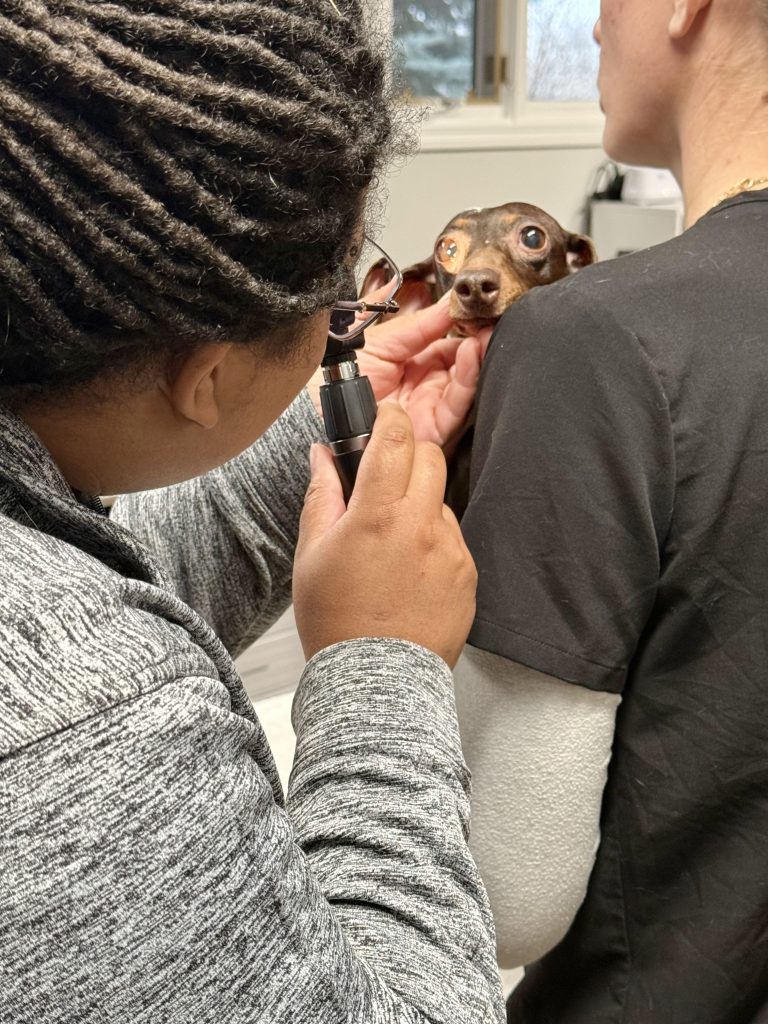
At Omnivet, we use specialized diagnostic tools including fluorescein staining to detect corneal ulcers, Schirmer tear testing to evaluate tear production, and tonometry to measure intraocular pressure and screen for glaucoma. These tests are quick, minimally invasive, and provide critical information that allows us to tailor treatment precisely to your pet’s condition. Treatment may include topical medicated eye drops or ointments, oral antibiotics or anti-inflammatories, e-collar use to prevent self-trauma, or referral to a veterinary ophthalmologist for complex cases.
If your pet is also showing signs of decreased appetite, vomiting, or general weakness or lethargy alongside their eye symptoms, these may indicate a broader health concern that warrants a comprehensive medical workup. Don’t wait — call Omnivet at (231) 244-4860 or visit our urgent care or walk-in appointments page to be seen promptly.
Frequently Asked Questions About Pet Eye Redness, Discharge & Squinting
What causes eye redness and discharge in pets?
Eye redness and discharge in pets can be caused by a wide range of conditions including bacterial or viral conjunctivitis, corneal ulcers, foreign bodies in the eye, allergies, dry eye syndrome, entropion, uveitis, and glaucoma. Environmental irritants such as dust, smoke, or chemical exposure can also cause sudden redness and tearing. Because so many different conditions present similarly, a thorough veterinary eye examination at Omnivet is the only reliable way to identify the exact cause and determine the most appropriate treatment.
Why is my pet squinting and blinking frequently?
Frequent squinting, blinking, or keeping one eye partially or fully closed is a strong indicator that your pet is experiencing eye pain or significant discomfort. This can result from a corneal scratch or ulcer, a foreign object in the eye, inflammation inside the eye (uveitis), or elevated intraocular pressure from glaucoma. These conditions are painful and can worsen rapidly — some, like glaucoma, can cause permanent vision loss within hours if untreated. If your pet is squinting, contact Omnivet at (231) 244-4860 as soon as possible rather than adopting a wait-and-see approach.
Can eye problems in pets resolve without treatment?
Occasionally, very mild irritation from dust or a brief environmental exposure may resolve on its own within a day. However, the vast majority of eye conditions in pets — including infections, corneal ulcers, dry eye, and glaucoma — will worsen without proper veterinary treatment. Attempting to manage eye issues at home with human eye drops or remedies is not recommended, as many products safe for humans can be harmful to pets. Early veterinary attention at Omnivet leads to faster resolution, less discomfort for your pet, and a significantly lower risk of complications including vision loss.
How does Omnivet diagnose eye conditions in pets?
Our team performs a comprehensive ophthalmic examination that includes a thorough assessment of the eye’s external and internal structures. We use fluorescein staining — a harmless dye that highlights corneal ulcers or scratches under a blue light — Schirmer tear testing to measure tear production and diagnose dry eye, and tonometry to measure intraocular pressure and screen for glaucoma. In some cases, bloodwork or a full medical workup may be recommended if a systemic condition is suspected as the underlying cause of the eye symptoms.
What treatments are available for eye redness and discharge in pets?
Treatment depends entirely on the underlying diagnosis. Bacterial conjunctivitis is typically treated with topical antibiotic eye drops or ointments, while viral cases may be managed with supportive care and antivirals in some species. Corneal ulcers require specific topical medications and close monitoring to ensure healing. Dry eye is managed with artificial tear supplementation and immunomodulating drops. Glaucoma may require pressure-lowering eye drops and in some cases referral for surgical intervention. Our team at Omnivet will explain every aspect of the treatment plan and demonstrate how to administer medications at home safely and effectively.
Is eye discharge always a sign of infection?
Not always. Discharge from the eyes can be caused by infection, but it can also result from allergies, blocked tear ducts, entropion (inward-rolling eyelids), dry eye, or even normal tearing that becomes more pronounced due to facial anatomy in certain breeds — such as Bulldogs, Pugs, and Persian cats. The color, consistency, and amount of discharge can provide clues: clear, watery discharge may suggest allergies or irritation, while thick yellow or green discharge typically points to bacterial infection. Our team at Omnivet will evaluate the full picture to give you an accurate diagnosis.
When is eye redness or squinting considered an emergency?
Certain eye presentations require emergency veterinary attention. These include sudden onset of significant eye pain, a cloudy or hazy appearance to the eye, a visible injury or foreign object embedded in the eye, a rapidly enlarging or bulging eye, or complete closure of the eye. Glaucoma — indicated by a hard, painful, and often reddened eye — is a true emergency that can result in permanent vision loss within 24 to 48 hours without treatment. If your pet is showing any of these signs, call Omnivet immediately at (231) 244-4860 or visit our emergency care page.