
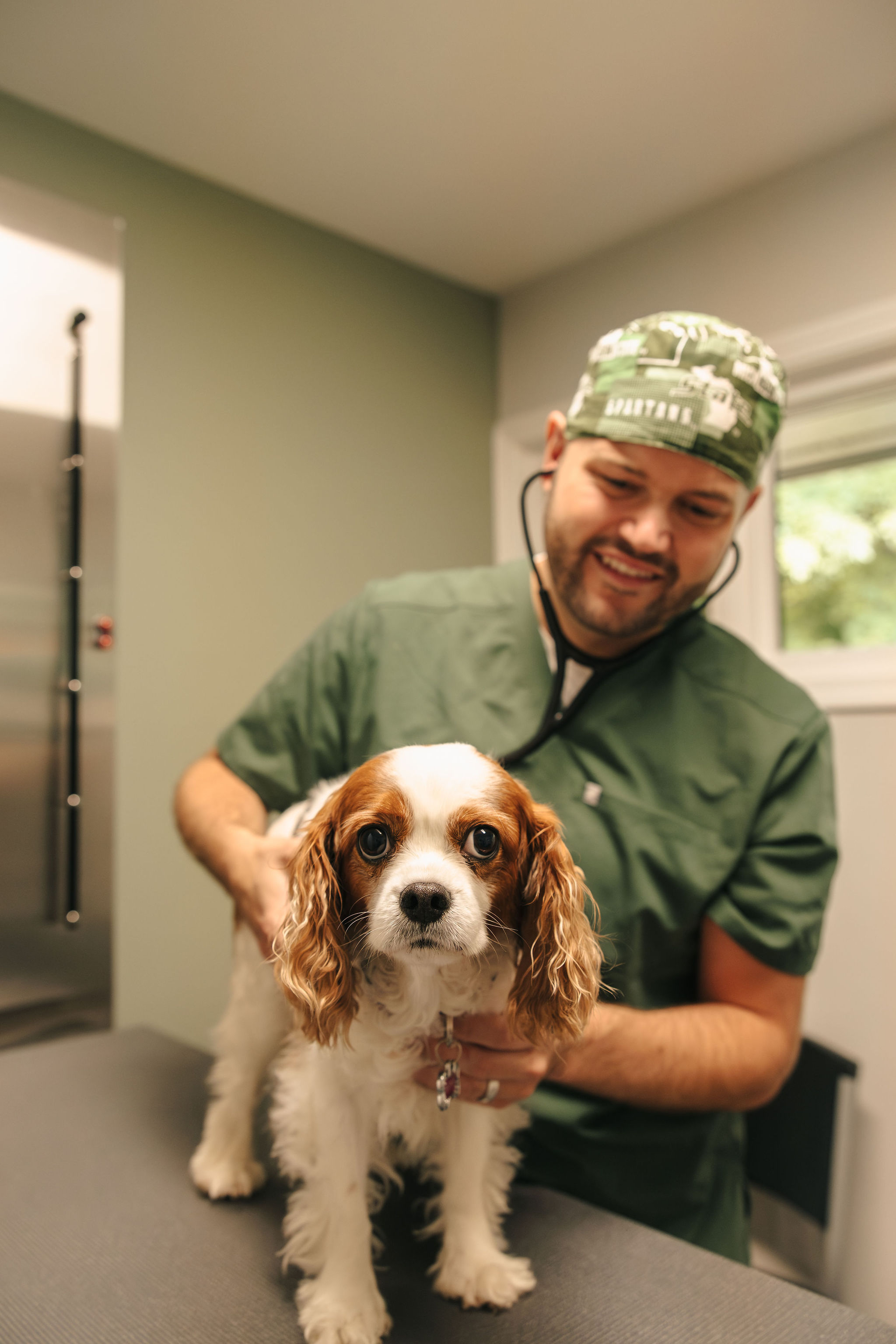
Pet Wound & Injury Treatment in Traverse City, MI
From bite wounds and deep cuts to punctures and burns, injuries can happen in an instant. At Omnivet in Traverse City, MI, our team cleans, repairs, and protects wounds properly to reduce pain, prevent infection, and help your pet heal as quickly as possible.
Types of Wounds and Injuries We Treat
- Bite wounds from dog fights, cats, or wildlife
- Deep cuts and lacerations from glass, metal, or sharp objects
- Puncture wounds from sticks, fences, and nails
- Abscesses, which are common after cat bites
- Paw pad injuries and broken nails
- Degloving and road rash injuries after car accidents
- Burns from heat, chemicals, or hot surfaces
- Hot spots and infected skin wounds
- Injuries from porcupine quills
For smaller, superficial cuts, visit our minor lacerations page.
Why Wounds Need Veterinary Care
Wounds are often worse than they look. Puncture and bite wounds can appear small on the surface while hiding damaged muscle, tissue pockets, and bacteria underneath. Without proper cleaning, they can quickly develop into painful infections or abscesses. Wounds on the chest or abdomen may also involve deeper structures. Prompt treatment, ideally within a few hours, gives the best chance of clean healing.
How We Treat Wounds
Your veterinarian will assess the wound, provide pain relief, and often sedate your pet so we can fully examine and clean it. Treatment may include clipping the fur, flushing and removing debris or dead tissue, closing the wound with sutures or staples, placing a drain for deep or contaminated wounds, and bandaging. We may prescribe antibiotics and pain medication. For serious injuries, digital X-rays can reveal fractures or foreign material, and some wounds require surgical repair.
When an Injury Is an Emergency
Call Omnivet at (231) 244-4860 and come in immediately if your pet has uncontrolled bleeding, a wound to the chest or abdomen, was hit by a car, was attacked by a larger animal, has trouble breathing, or shows signs of shock such as pale gums and weakness. These pets may need trauma stabilization before their wounds can be treated.
First Aid on the Way
Apply gentle pressure to bleeding wounds with a clean cloth, cover open wounds to keep them clean, and prevent your pet from licking. Handle injured pets carefully, since even gentle pets may bite when in pain. We are open Monday through Friday from 9am to 7pm and Saturday from 10am to 6pm. See our emergency care page for more guidance.
Frequently Asked Questions About Pet Wounds and Injuries
Does my pet’s wound need stitches?
Wounds that gape open, are longer than about half an inch, are deep, or keep bleeding usually need veterinary closure. Call (231) 244-4860 for guidance.
Why are bite wounds so serious?
Bite wounds push bacteria deep beneath the skin and often damage tissue underneath, which can lead to infection and abscesses even if the surface looks small.
How quickly should a wound be treated?
Ideally within a few hours. Early cleaning and closure lower the risk of infection and improve healing.
Can I clean my pet’s wound at home?
You can gently rinse minor wounds with clean water, but avoid hydrogen peroxide and alcohol, which damage tissue. Deeper wounds need veterinary care.
Will my pet need a cone?
Often, yes. A cone prevents licking and chewing, which can reopen wounds and introduce infection.
What are signs a wound is infected?
Swelling, redness, heat, odor, discharge, or increased pain can signal infection. Call us if you notice these signs.
When is a wound an emergency?
Uncontrolled bleeding, chest or abdominal wounds, car accidents, large animal attacks, and signs of shock need immediate emergency care.